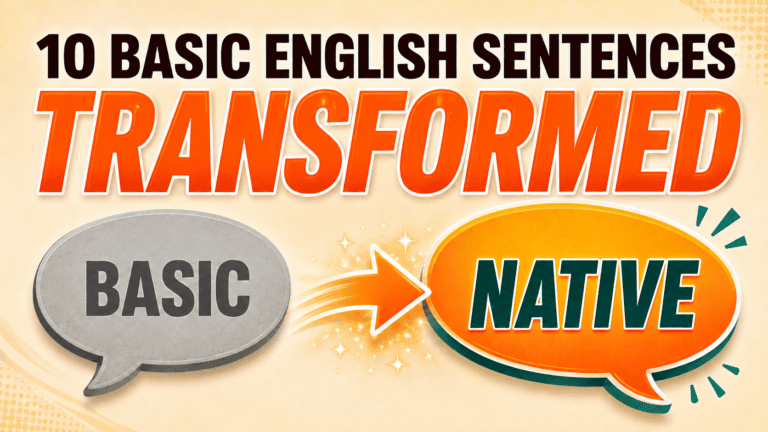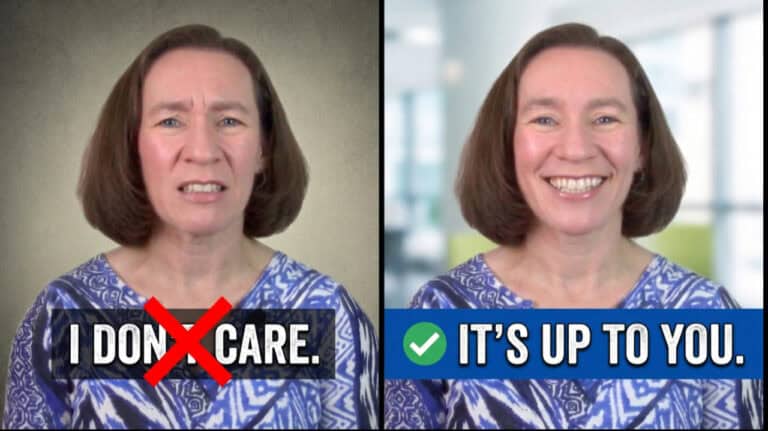

When you speak English, do you sound like a textbook, or do you sound like a native English speaker?
You may have learned sentences from a book or from an English class, which are perfectly correct, but they’re just not the way most people would say it in real life! Let’s look at 10 “textbook” phrases and replace them with “real life” phrases that are more common.
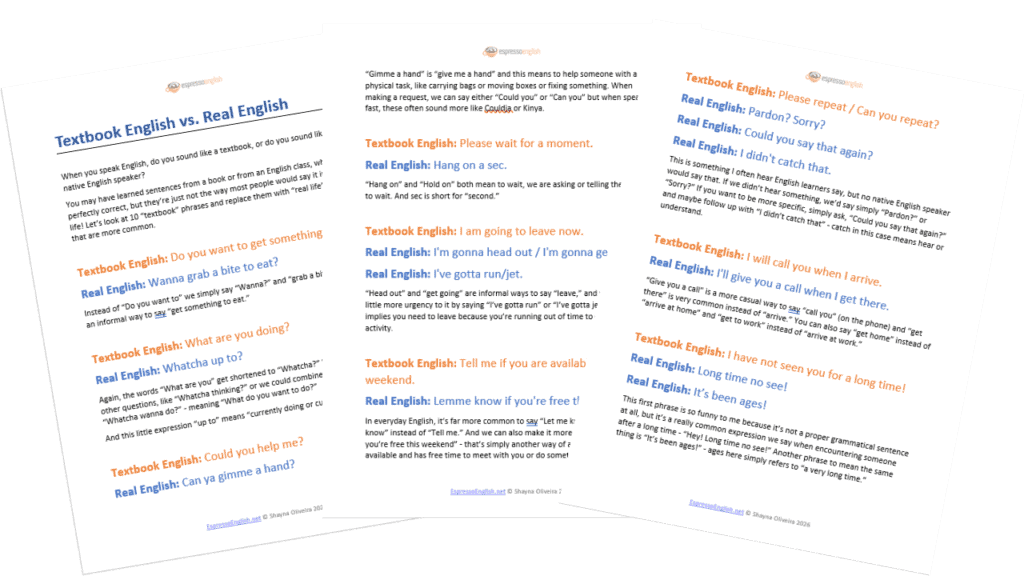
Textbook English: Do you want to get something to eat?
Real English: Wanna grab a bite to eat?
Instead of “Do you want to” we simply say “Wanna?” and “grab a bite to eat” is an informal way to say “get something to eat.”
Textbook English: What are you doing?
Real English: Whatcha up to?
Again, the words “What are you” get shortened to “Whatcha?” We see this in other questions, like “Whatcha thinking?” or we could combine it like this: “Whatcha wanna do?” – meaning “What do you want to do?”
And this little expression “up to” means “currently doing or currently involved in.”
Textbook English: Could you help me?
Real English: Can ya gimme a hand?
“Gimme a hand” is “give me a hand” and this means to help someone with a physical task, like carrying bags or moving boxes or fixing something. When making a request, we can say either “Could you” or “Can you” but when speaking fast, these often sound more like Couldja or Kinya.
Textbook English: Please wait for a moment.
Real English: Hang on a sec.
“Hang on” and “Hold on” both mean to wait, we are asking or telling the person to wait. And sec is short for “second.”
Textbook English: I am going to leave now.
Real English: I’m gonna head out / I’m gonna get going.
Real English: I’ve gotta run/jet.
“Head out” and “get going” are informal ways to say “leave,” and you could add a little more urgency to it by saying “I’ve gotta run” or “I’ve gotta jet” – this usually implies you need to leave because you’re running out of time to get to your next activity.
Textbook English: Tell me if you are available this weekend.
Real English: Lemme know if you’re free this weekend.
In everyday English, it’s far more common to say “Let me know” or “Lemme know” instead of “Tell me.” And we can also make it more casual by saying “if you’re free this weekend” – that’s simply another way of asking if the person is available and has free time to meet with you or do something together.
Textbook English: Please repeat / Can you repeat?
Real English: Pardon? Sorry?
Real English: Could you say that again?
Real English: I didn’t catch that.
This is something I often hear English learners say, but no native English speaker would say that. If we didn’t hear something, we’d say simply “Pardon?” or “Sorry?” If you want to be more specific, simply ask, “Could you say that again?” and maybe follow up with “I didn’t catch that” – catch in this case means hear or understand.
Textbook English: I will call you when I arrive.
Real English: I’ll give you a call when I get there.
“Give you a call” is a more casual way to say “call you” (on the phone) and “get there” is very common instead of “arrive.” You can also say “get home” instead of “arrive at home” and “get to work” instead of “arrive at work.”
Textbook English: I have not seen you for a long time!
Real English: Long time no see!
Real English: It’s been ages!
This first phrase is so funny to me because it’s not a proper grammatical sentence at all, but it’s a really common expression we say when encountering someone after a long time – “Hey! Long time no see!” Another phrase to mean the same thing is “It’s been ages!” – ages here simply refers to “a very long time.”
Textbook English: Goodbye.
Real English: See ya! / See ya later.
Real English: Take care!
Real English: Have a good one!
We almost never say “goodbye” in everyday English, although we might say the shortened form “bye.” But it’s also really common to say “See ya!” or “See ya later” if we have plans to meet the other person in the future.
“Take care” is kind of like you’re telling the other person to “be safe” but we don’t really use it literally, it’s just another way to end a conversation or interaction.
“Have a good one!” is wishing the other person a good day, and the typical response is “Thanks, you too!” and this functions as “goodbye,” as the two people are parting ways.
There you go! We’ve transformed 10 “textbook” phrases into REAL English phrases that sound a lot more natural.
Learn Real English for Real Life
If you want to speak naturally, you need to learn real English like this – and that’s what you can do inside my Everyday English Speaking Courses!
Level 1 teaches you real, practical phrases for day-to-day life – so you can speak confidently in any situation. And level 2 teaches you more advanced phrases and expressions that native speakers use, for more fluent and natural English.